Uncategorized

Uncategorized

Best Digital Marketing Courses in Borivali 2026 with Placement

Are you looking for the best digital marketing courses in Borivali? Learn better in digital marketing through our comprehensive, success-oriented course! Our innovative curriculum goes far beyond the basics of digital marketing. We’ve integrated the latest advances in AI tools into your learning so that you stay on top of the most evolved marketplace. And there are quite a few trade secrets about the memorable ideas and tactics here that make our course special. At Digital Marketing Institute Borivali, come learn the skills and abilities you’ll need to excel in today’s competitive environment, no matter your background. AI is transformative in nature and forms a large theme of our dynamic curriculum. Hence, you will not only stay ahead of the curve but also revolutionize your marketing strategy. What is the scope of digital marketing in India? Digital marketing happens to have been an integral part of modern business strategy, and India is no different. As increasingly more people in India are hooking up their computers to the internet, digital marketing is becoming ever more important than ever. The scope of digital marketing in India is huge and offers endless opportunities for businesses to grow and reach their target audience. In this blog post, we will discuss the scope of digital marketing in India and how it can help businesses in the country. India is inhabited by over 1.3 billion people, and approximately 50 percent use the Internet. This figure is only expected to increase in the near future as the government invests in digital infrastructure and more people start accessing the internet. Nowadays, the country enjoys using social media service providers such as Facebook, Twitter, Instagram, and LinkedIn, which are among the most widely used services by millions of users who log into their accounts daily. 5 Best Digital Marketing Courses in Borivali are listed below: Institute Name Contact Number Fees Internship/Placement Course Duration Location Grow Digital Institute 8291523575 35,000/- Yes 4 Months Borivali Lips India 9833201420 32,000/- – 4 Months Borivali Freelancer Academy 9082006765 50,000/- Yes 4 Months Borivali IIDE 9619958615 1,15,000/- Yes 6-11 Months Borivali Operating Media 7700022882 40,000/- Yes 4 Months Borivali 1. Best Digital Marketing Courses in Borivali Grow Digital Institute One of the best digital marketing institutes in Borivali, Mumbai. Grow Digital Institute offers advanced courses in digital marketing. Our team of trainers is highly qualified and committed to giving their best participants the greatest practical training. Digital Rohan Thakur, one of our team’s experienced trainers, has six years of professional expertise and a passion for training. They will guide you through our comprehensive curriculum, which includes PPC advertising, email marketing, social media marketing, SEO, and more. We feel proud of our student’s achievements and help them start their careers in digital marketing by helping them find jobs. Our Advanced Digital Marketing Courses are designed to provide you with the skills you need to become an expert in digital marketing. We believe that digital marketing is 80% practical implementation and 20% theory, which is why our curriculum focuses on hands-on learning through projects and practical exercises. At Grow Digital Institute, we believe in providing our students with hands-on experience, so you can expect to work on real-life projects and gain practical knowledge to apply in the real world. Grow Digital Institute offers Advanced Digital Marketing Courses, SEO Courses, Social Media Marketing Courses, and Website Development Courses Advanced Digital Marketing Courses In Borivali Syllabus 2026 Enroll in the  Digital Marketing Course at Grow Digital Institute! With the help of our well-designed curriculum, students are getting extensive and beneficial training that will help them succeed in the quickly changing field of digital marketing. Digital Marketing Tools & Platform We cover Strategies of AI Tools in our Latest Digital Marketing Course Take your digital marketing skills up a notch with our all-inclusive, result-based course! Creative curriculum in digital marketing: Develop the best practices of digital marketing at the next level with the latest artificial intelligence tools and make them work for you. Learn the trade secrets behind memorable ideas and tactics that make our course stand out!. Whether you are one of the novices or a seasoned pro, our digital marketing courses in Borivali will surely help you outdo in this highly competitive environment. The transformative power of AI is one of the primary themes in the dynamic curriculum we have, and this will be sure to help you stay ahead of the curve as well as revamp your marketing strategy. Advanced Course Benefits Grow Digital Institute Course Duration 4 Months (Monday – Saturday), Daily – 2 hours Fees 35,000/- Website growdigitalinstitute.com Contact Number +91 8291523575 Address B/4 – Ground Floor, Dwarkwsh Building, L.T Road, Borivali West Modules & Ai Integrated Syllabus 45+ Major Modules & Yes Placement Assurance Yes         Students Gallery Name * First Last Numbers * Email * Message * Send Message 2. Best Digital Marketing Courses in Borivali Lips India LIPSINDIA, located in Borivali, is a leading destination for premium digital marketing training. With a successful track record of training 5000+ digital marketers, the institute offers an exhaustive digital marketing course curriculum. The course structure emphasizes hands-on practical learning on all digital marketing channels, including Search Engine Optimization, Social Media Marketing, Google AdWords – PPC, Display Marketing, E-mail Marketing, Ad-server, Affiliate Marketing, Mobile Marketing, Analytics, and other relevant tools. LIPSINDIA prides itself on providing instruction from industry experts. The institute offers both classroom training and online live training programs, with the option for weekday or weekend training to accommodate students’ schedules. Course Benefits Lips India Course Duration 4 Months Fees 32,0000/- Website lipsindia.com Contact Number 9833201420 Batch Weekdays Address Borivali Placement Assurance Yes 3. Best Digital Marketing Courses in Borivali Freelancer Academy Freelancers Academy is one of the best institutes for digital marketing training and one of the few centers which has its own in-house digital marketing agency. They are targeting the gap by building a course which can help people to get an opportunity to work on “LIVE PROJECTS”
Uncategorized

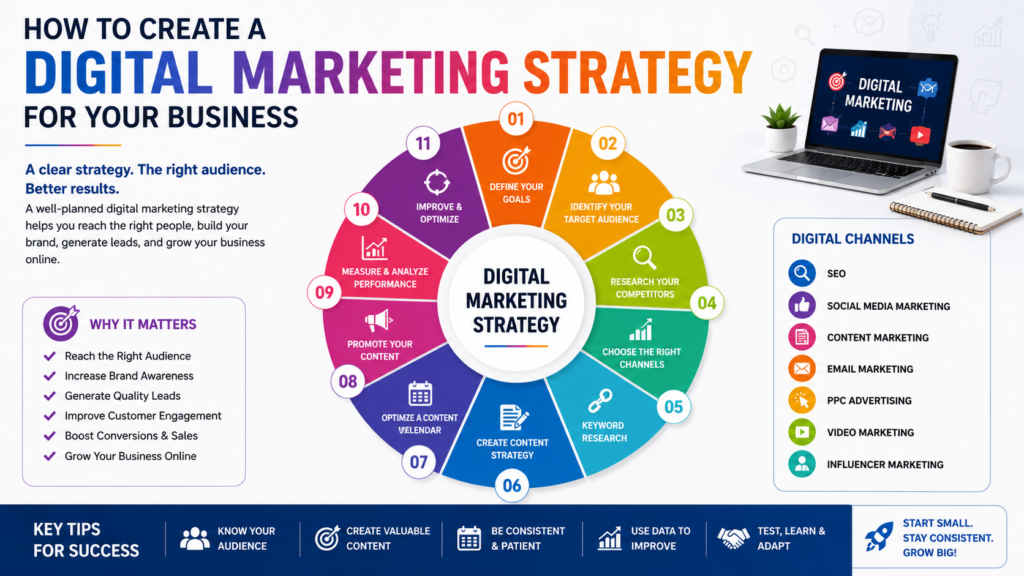
How to Create a Digital Marketing Strategy for Your Business

In today’s competitive online world, having a strong digital presence is essential for businesses of all sizes. However, simply having a website or social media account is not enough. Businesses need a clear digital marketing strategy to reach the right audience, increase brand awareness, generate leads, and achieve their marketing goals. A well-planned online marketing strategy helps businesses decide which digital channels to use, what type of content to create, how to reach potential customers, and how to measure results. In this guide, you’ll learn how to create a digital marketing strategy for your business step by step. What Is a Digital Marketing Strategy? A digital marketing strategy is a planned approach to promoting a business, product, or service through online channels. It can include: The purpose of a digital marketing strategy is to connect your business with the right audience through the channels they use most. Why Does Your Business Need a Digital Marketing Strategy? Without a clear plan, businesses may spend time and money creating content without knowing whether it is helping them achieve their goals. A digital marketing plan can help you: 1. Reach the Right Audience You can identify your ideal customers and create marketing messages specifically for them. 2. Increase Online Visibility SEO, content marketing, and social media can help more people discover your business online. 3. Generate Leads A strong strategy can guide visitors toward actions such as contacting your business, signing up, or requesting information. 4. Build Brand Awareness Consistent online content can help people recognize and remember your brand. 5. Measure Marketing Performance Digital channels provide useful data that can help you understand what is working and what needs improvement. Step 1: Define Your Business Goals The first step in creating a successful digital marketing strategy is deciding what you want to achieve. Your goals should be specific and measurable. Common digital marketing goals include: Example Instead of setting a goal such as: “I want more followers.” Set a more specific goal: “Increase relevant Instagram followers and engagement over the next three months while driving more visitors to the website.” Clear goals make it easier to measure your progress. Step 2: Identify Your Target Audience Your marketing strategy should be built around your audience. Before creating content, understand: For example, a digital marketing website targeting beginners may focus on: Audience: Students, beginners, small business owners, and people learning digital marketing. Needs: Simple explanations, practical tips, SEO guidance, content ideas, and marketing strategies. Understanding your audience helps you create more relevant content. Step 3: Research Your Competitors Competitor research can help you understand what is already working in your industry. Look at: Don’t simply copy competitors. Instead, identify opportunities to provide something more useful, clearer, or different. For example, if competitors publish basic SEO articles, you could create detailed beginner-friendly guides with examples, checklists, and practical steps. Step 4: Choose the Right Digital Marketing Channels You don’t need to use every marketing channel at once. Choose channels based on your audience and goals. SEO Use SEO when you want to attract people searching for relevant information, products, or services. SEO activities can include: Social Media Marketing Use social media to: Choose platforms where your target audience is active. Content Marketing Create useful content such as: Content marketing can support both SEO and social media marketing. Email Marketing Email can help you maintain relationships with people who have already shown interest in your business. You can send: Paid Advertising Paid advertising can help businesses reach specific audiences and promote products, services, landing pages, or offers. Paid campaigns should have clear objectives and measurable outcomes. Step 5: Build Your Keyword Strategy If SEO is part of your digital marketing plan, keyword research is essential. Identify keywords that your audience uses when searching online. For a digital marketing website, examples could include: Organize keywords according to search intent. Informational Keywords Users want to learn something. Example:“What is digital marketing?” Commercial Keywords Users are researching an option. Example:“Best digital marketing strategies” Transactional Keywords Users are ready to take action. Example:“Digital marketing services” Creating content around different search intents can help you reach users at different stages of their journey. Step 6: Create a Content Strategy Content should be an important part of your digital marketing plan. Create content that answers your audience’s questions and solves their problems. Example Content Pillars For a digital marketing website: SEO Social Media Marketing Content Marketing Digital Marketing These content pillars help keep your website focused and organized. Step 7: Create a Content Calendar A content calendar helps you stay consistent. Here is a simple example: Day Platform Content Monday Website SEO Blog Tuesday Instagram Marketing Reel Wednesday LinkedIn Digital Marketing Tip Thursday Instagram Carousel Friday Website Marketing Guide Saturday YouTube Educational Video Sunday Social Media Weekly Tip You can adjust this schedule based on your resources and audience. Consistency is more important than creating an unrealistic publishing schedule. Step 8: Optimize Your Website Your website is the center of your digital marketing strategy. Make sure your website is: Important website pages may include: Each page should have a clear purpose. Step 9: Create Strong Calls-to-Action A call-to-action tells visitors what to do next. Examples include: Place relevant calls-to-action throughout your website and content. Step 10: Use Social Media to Promote Your Content Don’t publish a blog post and simply leave it on your website. Promote it across relevant social media channels. For example: One Blog Post “10 Effective SEO Strategies to Improve Your Website Ranking” Can become: This is called content repurposing. It allows you to get more value from one piece of content. Step 11: Measure Your Digital Marketing Performance A successful digital marketing strategy should always be measured. Important metrics include: Website Traffic How many people visit your website? Organic Traffic How many visitors come from search engines? Keyword Performance How visible is your website for your target keywords? Social Media Engagement How are people interacting with your content? Click-Through Rate How often do people click your links

Uncategorized

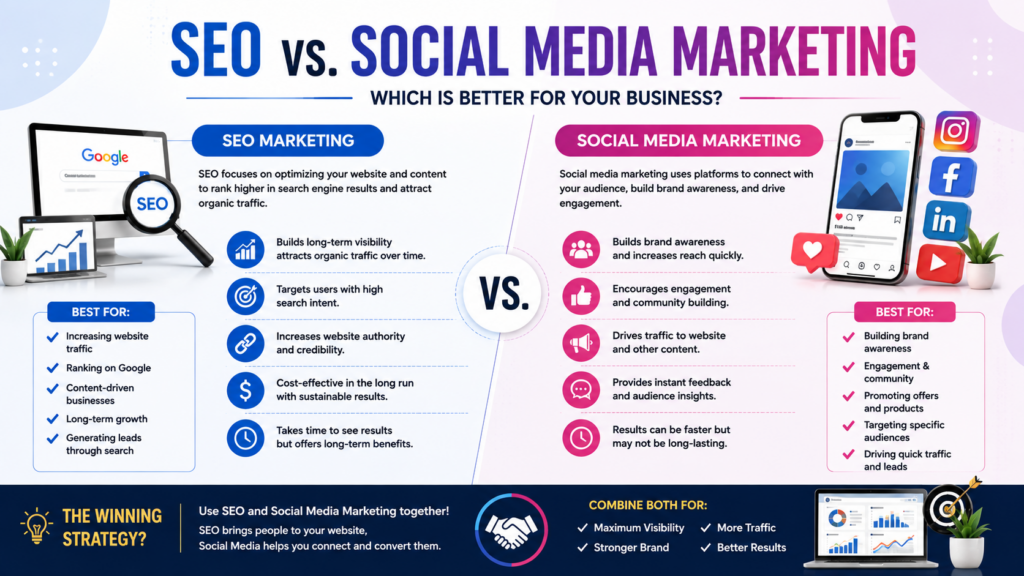
SEO vs. Social Media Marketing: Which Is Better for Your Business?

SEO vs. Social Media Marketing: Which Is Better for Your Business? Primary Keyword: SEO vs Social Media MarketingSecondary Keywords: SEO Marketing, Social Media Marketing, SEO Strategy, Social Media Strategy, Digital Marketing, Online Marketing Introduction In today’s digital world, businesses need a strong online presence to attract customers and grow their brand. Two of the most popular digital marketing channels are SEO (Search Engine Optimization) and social media marketing. But which one is better for your business? The answer depends on your goals, target audience, industry, budget, and marketing strategy. SEO marketing can help your website attract organic traffic from search engines, while social media marketing can help you build brand awareness, engage with your audience, and promote your content. Rather than choosing only one, many businesses can benefit from using SEO and social media marketing together. In this guide, we’ll compare SEO vs. social media marketing, explain their benefits and differences, and help you decide which strategy may be right for your business. What Is SEO Marketing? Search Engine Optimization (SEO) is the process of optimizing a website and its content to improve its visibility in organic search engine results. When people search for information, products, or services online, search engines try to provide the most relevant results. For example, someone may search for: “Best digital marketing tips for beginners” An SEO-optimized blog post targeting that topic may have an opportunity to appear in search results. SEO typically includes: What Is Social Media Marketing? Social media marketing is the use of social media platforms to promote a business, product, service, or brand and connect with a target audience. Businesses can use social media to: Popular social media content formats include: SEO vs. Social Media Marketing: Key Differences Although both are digital marketing strategies, SEO and social media marketing work differently. SEO Marketing Social Media Marketing Focuses on search engines Focuses on social platforms Primarily attracts search-based traffic Primarily builds audience and engagement Often a long-term strategy Can generate faster audience interaction Focuses heavily on search intent Focuses heavily on interests and engagement Drives traffic to websites Can drive traffic to websites and profiles Builds organic search visibility Builds social presence and brand awareness Requires website and content optimization Requires consistent social content Neither strategy is automatically better. Each serves a different purpose. Benefits of SEO Marketing 1. Generates Organic Traffic SEO can help your website attract people who are actively searching for information related to your products, services, or industry. This can be valuable because search users often have a specific need or question. 2. Builds Long-Term Visibility A well-optimized piece of content can continue attracting organic visitors over time. For example, an informative blog post can potentially generate search traffic long after it is published. However, rankings are not guaranteed, and content may need to be updated as search results and user needs change. 3. Targets Search Intent SEO allows you to create content around specific searches. For example: Informational:“What is SEO?” Commercial:“Best SEO tools for small businesses” Transactional:“SEO services” Understanding search intent helps businesses create content that matches what users are looking for. 4. Builds Website Authority Consistently publishing useful and relevant content can help establish your website as a valuable resource within your industry. 5. Supports Local Businesses Local SEO can help businesses become more visible for searches related to their location. Examples include: Benefits of Social Media Marketing 1. Builds Brand Awareness Social media can introduce your brand to people who may not be actively searching for your products or services.2. Creates Direct Engagement Unlike search engines, social platforms provide opportunities for direct interaction through: This can help businesses build relationships with their audience. 3. Supports Content Distribution A blog post published on your website can be promoted through social media. For example: SEO Blog → Instagram Carousel → LinkedIn Post → Short Video → Website Traffic This allows one piece of content to reach audiences across multiple channels. 4. Provides Fast Feedback Social media can make it easier to see how people react to your content. Likes, comments, shares, saves, views, and messages can provide useful audience feedback. 5. Helps Build a Community Social media can help brands create communities around shared interests, products, services, or ideas SEO vs. Social Media Marketing: Which Is Better? There is no universal winner. The better strategy depends on your business goals. Choose SEO If Your Goal Is: For example, a digital marketing website publishing educational blogs may benefit significantly from SEO. Choose Social Media Marketing If Your Goal Is: For example, a personal digital marketer may use Instagram and LinkedIn to share marketing tips, personal insights, and educational content. SEO vs. Social Media Marketing for Small Businesses Small businesses often have limited time and marketing budgets. Instead of trying to dominate every channel, start by choosing strategies that match your audience. SEO can be useful when: Your customers regularly search Google for products, services, or solutions. Social media can be useful when: Your audience spends significant time on social platforms and responds well to visual or interactive content. A combination can be powerful when: You want to build both search visibility and an engaged audience. SEO vs. Social Media Marketing for Personal Brands Personal brands can benefit from both channels. For example, a digital marketer can use: SEO to publish detailed articles and attract search traffic. Instagram to share reels, carousels, and quick marketing tips. LinkedIn to share professional insights and industry knowledge. YouTube to publish detailed tutorials. This creates a multi-channel digital marketing strategy. How SEO and Social Media Work Together SEO and social media should not necessarily be treated as competitors. They can support each other. A simple strategy could look like this: Step 1: Create SEO-Optimized Content Write a helpful blog targeting a relevant search topic. Step 2: Publish It on Your Website Optimize the title, headings, keywords, images, internal links, and user experience. Step 3: Promote the Content on Social Media Turn the blog into: Step 4: Drive People to Your Website Use

Uncategorized

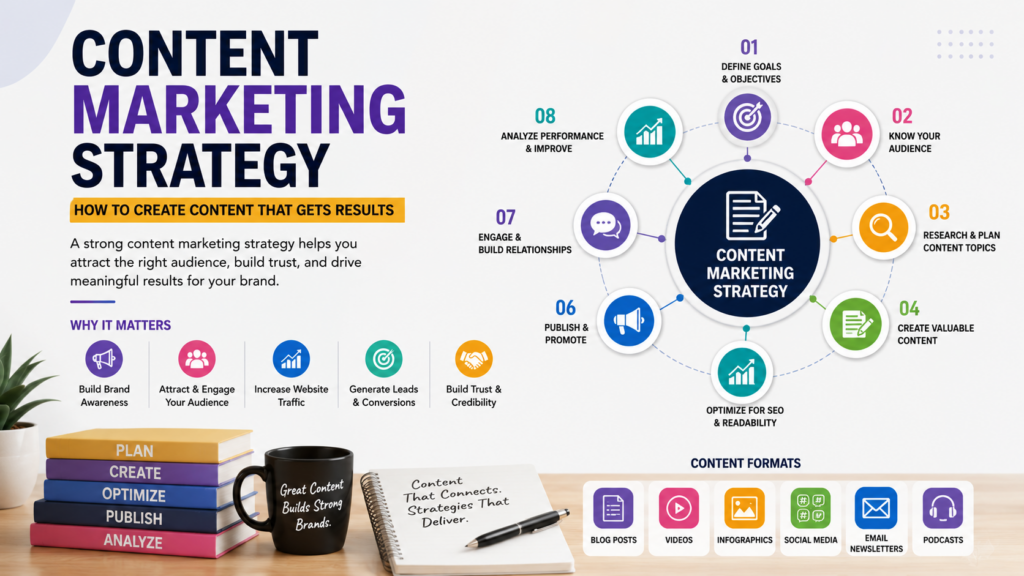
Content Marketing Strategy: How to Create Content That Gets Results

In today’s competitive digital world, creating content is one of the most effective ways to attract an audience, build brand awareness, and grow an online presence. However, simply publishing blog posts, social media posts, or videos does not guarantee results. A successful content marketing strategy starts with understanding your audience, defining clear goals, creating valuable content, and measuring performance. When content is created with a purpose, it can help businesses attract potential customers, build trust, increase website traffic, and support conversions. In this guide, we will explore what content marketing is, why it is important, how to create a content marketing strategy, and practical content creation tips that can help your business get better results. What Is Content Marketing? Content marketing is a digital marketing approach that involves creating and distributing valuable, relevant, and consistent content to attract and engage a specific target audience. Instead of focusing only on direct promotion, content marketing aims to provide useful information that helps people solve problems, answer questions, or make better decisions. Examples of content marketing include: For example, a digital marketer could create a blog titled “10 Effective SEO Strategies to Improve Your Website Ranking” to help beginners learn about SEO while attracting people interested in digital marketing. Why Is Content Marketing Important? A strong content marketing strategy can support several important business goals. 1. Builds Brand Awareness Publishing useful content can introduce your brand to new audiences. When people repeatedly discover helpful content from your website or social media channels, they may become more familiar with your brand. 2. Increases Website Traffic SEO-optimized blog posts can attract people searching for information through search engines. For example, an article targeting the keyword “content marketing strategy” can potentially attract users who are actively looking for information about content marketing. Social media can also help distribute your content and encourage people to visit your website. 3. Builds Trust and Credibility Helpful content can demonstrate your knowledge and expertise. Instead of simply telling your audience that you understand digital marketing, you can demonstrate your knowledge by publishing: This can help establish your website as a useful resource. 4. Supports SEO Content marketing and SEO work closely together. Creating useful, search-focused content gives search engines more relevant pages to discover and potentially rank. A strong content strategy can include: 5. Generates Leads Content can guide potential customers through different stages of their decision-making process. For example: Blog Post → Valuable Information → Website Visit → Call-to-Action → Inquiry A well-designed content strategy can turn useful information into opportunities for generating leads. Content Marketing vs Traditional Advertising Traditional advertising usually focuses on directly promoting a product, service, or brand. Content marketing focuses more heavily on providing value before asking the audience to take action. Content Marketing Traditional Advertising Educational Promotional Builds long-term value Often campaign-focused Answers customer questions Promotes an offer Supports SEO Usually doesn’t rely on organic search Builds audience relationships Focuses on reaching an audience Both approaches can be useful, but content marketing provides opportunities to build an ongoing library of valuable resources. How to Create a Content Marketing Strategy A successful content marketing strategy requires planning. Step 1: Define Your Goals Start by deciding what you want your content to achieve. Common content marketing goals include: Your content should have a clear purpose. Step 2: Identify Your Target Audience You need to understand who you are creating content for. Consider: For example, if your audience consists of beginners interested in digital marketing, you may want to create simple guides rather than highly technical articles. Step 3: Research Your Audience’s Questions One of the best ways to create useful content is to understand what your audience wants to know. Look for: This can help you create content that addresses real audience needs. Step 4: Perform Keyword Research If SEO is one of your goals, keyword research should be part of your content planning. For example, a digital marketing website could target keywords such as: Don’t simply choose keywords because they have high search volume. Consider whether the keyword is relevant to your audience and whether your content can genuinely satisfy the search intent. Step 5: Choose Your Content Formats Different audiences prefer different content formats. Your content strategy can include: Blog Posts Useful for detailed educational information and SEO. Videos Useful for tutorials, demonstrations, explanations, and engaging storytelling. Social Media Posts Useful for quick tips, educational content, announcements, and audience engagement. Infographics Useful for presenting statistics, processes, and complex information visually. Case Studies Useful for demonstrating strategies, processes, and outcomes. E-books and Guides Useful for providing detailed information and generating leads. Step 6: Create Content Pillars Content pillars are the main topics that your brand consistently discusses. For a digital marketing website, content pillars could include: SEO Topics about: Social Media Marketing Topics about: Content Marketing Topics about: Digital Marketing Topics about: Content pillars help keep your website focused and organized. Step 7: Create a Content Calendar A content calendar helps you plan and publish consistently. For example: Day Content Type Topic Monday Blog SEO Strategy Tuesday Instagram Reel Marketing Tip Wednesday Carousel Content Marketing Thursday Story Audience Question Friday Blog Social Media Marketing Saturday Video Digital Marketing Tutorial Sunday Post Weekly Marketing Tip You can change the schedule based on your available time and audience behavior. Step 8: Optimize Content for SEO Creating valuable content is important, but making it easy for search engines to understand is also useful. Basic SEO practices include: Use a Clear Title Include the primary keyword naturally in the page title when appropriate. Use Headings Break your article into logical H2 and H3 sections. Add Internal Links Link to relevant articles and pages on your website. Optimize Images Use descriptive image file names and useful alt text. Match Search Intent Make sure the content answers the question behind the user’s search. Write Naturally Avoid excessive keyword repetition. Your content should sound natural and be written primarily for readers. Step 9: Promote Your Content Publishing content is only part

Uncategorized

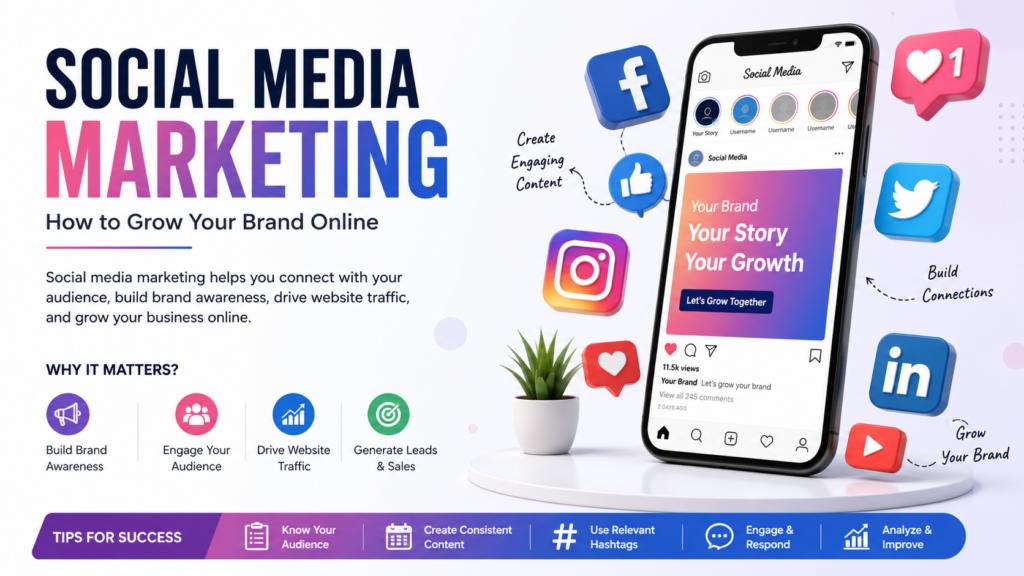
Social Media Marketing: How to Grow Your Brand Online

Introduction Social media has become one of the most powerful channels for businesses to connect with their target audience. From Instagram and Facebook to LinkedIn, YouTube, and other platforms, social media gives brands opportunities to build awareness, share valuable content, engage with customers, and grow their online presence. However, simply creating a social media account and posting occasionally is not enough. A successful social media marketing strategy requires clear goals, consistent content, audience research, and regular performance analysis. In this guide, you will learn what social media marketing is, why it matters, how to create a social media strategy, and practical social media marketing tips to help grow your brand online. What Is Social Media Marketing? Social media marketing is the use of social media platforms to promote a brand, product, service, or business and connect with a target audience. Businesses can use social media marketing to: Social media marketing can be used by small businesses, personal brands, startups, creators, and established companies. Why Is Social Media Marketing Important? A strong social media presence can help your brand stay visible and connected with its audience. 1. Builds Brand Awareness Regularly sharing useful and engaging content can help people discover your brand and become familiar with what you offer. For example, a digital marketing brand can share: Over time, consistent content can help establish brand recognition. 2. Helps You Reach Your Target Audience Social media platforms provide opportunities to reach specific groups of people based on interests, demographics, location, and behavior. Instead of trying to communicate with everyone, you can create content specifically for the people who are most likely to be interested in your brand. 3. Increases Customer Engagement Social media is not only a promotional channel. It is also a communication platform. Businesses can interact with their audience through: Responding to your audience can help create stronger relationships and trust. 4. Drives Website Traffic Social media can be used to introduce people to your website. For example, you can share a blog post on Instagram, LinkedIn, Facebook, or other relevant platforms and encourage your audience to read the complete article on your website. This creates a connection between your social media content and your website. 5. Supports Lead Generation Social media can help businesses generate potential customers through: The key is to provide a clear next step for interested users. Popular Social Media Marketing Platforms Different platforms attract different audiences and content styles. Your business does not necessarily need to be active on every platform. Instagram Instagram is highly visual and works well for: It can be especially useful for brands that depend heavily on visual communication. Facebook Facebook can be useful for: It can also support local marketing and customer engagement. LinkedIn LinkedIn is particularly useful for professional and B2B marketing. Businesses can share: For a digital marketer, LinkedIn can be a useful platform for demonstrating expertise. YouTube YouTube is a powerful platform for long-form and short-form video content. You can create: Video content can also support your overall content marketing strategy. How to Create a Social Media Marketing Strategy A successful social media strategy starts with planning. Step 1: Define Your Goals Before posting content, decide what you want to achieve. Common social media goals include: Your goals should be specific and measurable. Step 2: Understand Your Target Audience Knowing your audience is essential. Ask questions such as: For example, if your target audience is beginners interested in digital marketing, educational and easy-to-understand content may perform better than highly technical content. Step 3: Choose the Right Platforms You don’t need to be everywhere. Start with platforms where your target audience is most active. For example: Platform Suitable Content Instagram Reels, carousels, stories Facebook Posts, videos, communities LinkedIn Professional posts, articles YouTube Tutorials, educational videos Pinterest Visual guides and inspiration Choose one or two platforms initially and focus on creating high-quality content consistently. Step 4: Create Content Pillars Content pillars are the main topics you regularly talk about. For a digital marketing website, your content pillars could include: SEO Share: Social Media Marketing Share: Content Marketing Share: Digital Marketing Education Share: Content pillars make it easier to plan and maintain consistent content. Step 5: Use Different Content Formats Don’t rely on only one type of post. Experiment with: Reels Short videos can be useful for educational tips, quick tutorials, and engaging content. Carousels Carousels are useful for step-by-step guides, lists, and educational information. Stories Stories can be used for behind-the-scenes content, polls, questions, announcements, and quick updates. Images Simple graphics can communicate tips, statistics, quotes, or announcements. Long-Form Videos Long-form videos can provide detailed education and establish expertise. Step 6: Create a Content Calendar A content calendar helps maintain consistency. For example: Day Content Type Topic Monday Educational Post SEO Tip Tuesday Reel Digital Marketing Tip Wednesday Carousel Social Media Strategy Thursday Story Question/Poll Friday Educational Post Content Marketing Saturday Reel Marketing Mistake Sunday Personal/Brand Post Weekly Insights You can adjust this schedule according to your audience and available time. 10 Social Media Marketing Tips 1. Be Consistent Consistency helps your audience know when and what to expect from your brand. You don’t need to post constantly. Focus on maintaining a realistic schedule you can follow. 2. Provide Value Educational and useful content can help attract and retain your audience. Instead of constantly saying “Buy now,” provide information that helps your audience solve problems. 3. Use Strong Visuals High-quality images, videos, graphics, and consistent branding can make your content more recognizable. 4. Write Engaging Captions A good caption should support the visual content and encourage users to interact. You can end posts with questions such as: “Which SEO strategy are you going to try first?” 5. Use Relevant Hashtags Carefully Relevant hashtags can help categorize your content and potentially improve discoverability. Avoid using unrelated hashtags simply because they are popular. 6. Encourage Engagement Ask questions, create polls, invite opinions, and respond to comments. Social media is about communication, not just broadcasting. 7. Use Calls-to-Action Tell your audience

Uncategorized

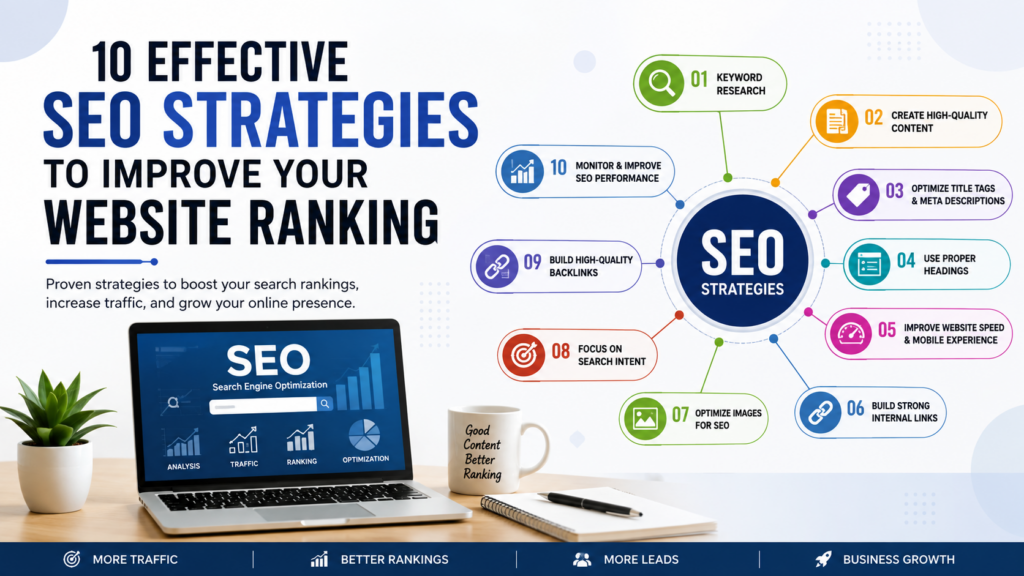
10 Effective SEO Strategies to Improve Your Website Ranking

Introduction Having a website is only the first step toward building an online presence. If people cannot find your website on search engines, it becomes difficult to attract organic traffic, generate leads, and grow your business online. This is where Search Engine Optimization (SEO) becomes important. SEO is the process of improving your website and its content so that search engines can better understand your pages and users can find useful information more easily. A well-planned SEO strategy can help improve your website’s visibility, attract relevant visitors, and support long-term online growth. In this blog, we will explore 10 effective SEO strategies to improve your website ranking and build a stronger search presence. What Is SEO? Search Engine Optimization (SEO) is the practice of optimizing a website to improve its visibility in organic search engine results. SEO focuses on both search engines and users. The goal is not simply to add keywords to a webpage, but to create useful, accessible, and relevant content that satisfies what people are searching for. A successful SEO strategy can include: 10 Effective SEO Strategies 1. Conduct Keyword Research Keyword research is one of the most important parts of an SEO strategy. Before creating content, identify the words and phrases your target audience uses when searching for information, products, or services. For example, if your website focuses on digital marketing, potential keywords could include: How to use keywords effectively: The goal is to create content that answers the user’s question rather than simply repeating a keyword. 2. Create High-Quality, Helpful Content Content is a major part of a successful SEO strategy. Search engines aim to provide users with useful and relevant results. Therefore, your content should answer questions, solve problems, and provide genuine value. Instead of creating short articles just to target keywords, create comprehensive content that covers a topic clearly. For example, instead of writing a short article titled: “SEO Tips” you could create: “10 Effective SEO Strategies to Improve Your Website Ranking” A detailed article can cover multiple related questions and provide more value to readers. Good SEO content should be: 3. Optimize Your Title Tags and Meta Descriptions Your title tag and meta description help users understand what your webpage is about when it appears in search results. Example: SEO Title:10 Effective SEO Strategies to Improve Your Website Ranking Meta Description:Discover 10 effective SEO strategies to improve website visibility, attract organic traffic, and strengthen your search engine ranking. A good title should clearly describe the page and naturally include the main keyword. Your meta description should provide a concise reason for users to click on your result. 4. Use Proper Headings Headings make your content easier to read and help organize your webpage. Use a logical structure such as: H1: Main page title H2: Main sections H3: Subsections For example: H1: 10 Effective SEO Strategies to Improve Your Website Ranking H2: What Is SEO? H2: 10 Effective SEO Strategies H3: Conduct Keyword Research H3: Create High-Quality Content A clear heading structure makes long articles easier for both readers and search engines to understand. 5. Improve Website Speed and Mobile Experience Website performance is important for both users and search visibility. A slow website can create a poor user experience and may cause visitors to leave before exploring your content. To improve website performance: Your website should also be responsive so that it works properly across smartphones, tablets, and desktops. 6. Build a Strong Internal Linking Structure Internal links connect one page on your website to another page on the same website. For example, if you have an article about SEO strategies, you can link to related articles about: Internal linking can help visitors discover more useful content while helping search engines understand the relationships between pages on your website. Best practices: 7. Optimize Images for SEO Images can improve the visual quality of your website, but they should also be optimized. Important image SEO practices include: Use Descriptive File Names Instead of: IMG12345.jpg use something descriptive such as: seo-strategies-website-ranking.jpg Add Useful Alt Text Alt text should describe the image accurately. Example: “SEO strategies for improving website ranking” Compress Images Large image files can slow down your website. Compress images while maintaining reasonable visual quality. 8. Focus on Search Intent Understanding search intent is an important SEO technique. Search intent refers to what the user is actually trying to accomplish when they search for something. There are several common types of search intent. Informational Intent The user wants to learn something. Example: “What is SEO?” Navigational Intent The user wants to find a particular website or page. Example: “Google Search Console” Commercial Intent The user is researching products or services before making a decision. Example: “Best SEO tools for small businesses” Transactional Intent The user is ready to take an action or make a purchase. Example: “Buy SEO software” Creating content that matches search intent can make your pages more relevant to your target audience. 9. Build High-Quality Backlinks Backlinks are links from other websites pointing to your website. When reputable and relevant websites link to your content, they can help increase your website’s authority and discoverability. However, SEO is not about collecting as many links as possible. Focus on earning relevant, natural, and high-quality backlinks. Some legitimate ways to attract backlinks include: Avoid manipulative link-building practices that attempt to artificially influence search rankings. 10. Monitor and Improve Your SEO Performance SEO is an ongoing process. After publishing and optimizing your website, monitor performance to understand what is working. Important metrics include: Regularly reviewing performance can help you identify opportunities for improvement. For example, if a blog post receives many impressions but few clicks, you could review its title and search-result presentation. If a page receives traffic but few conversions, you could improve its content, navigation, or call-to-action. Bonus SEO Tips for Beginners If you are new to SEO, start with these simple practices: 1. Focus on One Main Topic Each webpage should have a clear purpose and topic. 2. Write for

Uncategorized

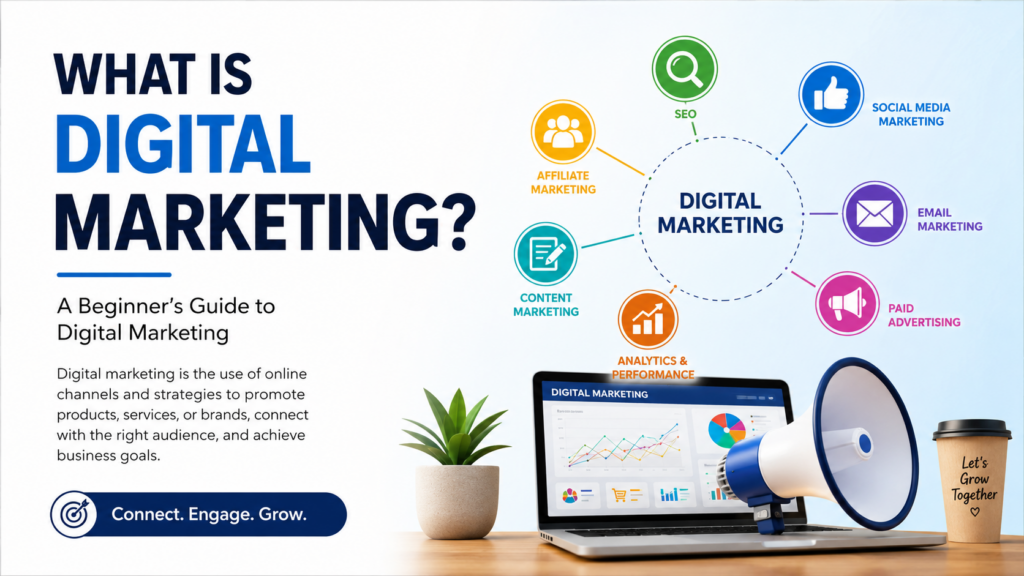
What Is Digital Marketing? A Beginner’s Guide to Digital Marketing

Introduction In today’s digital world, businesses need more than traditional advertising to reach their customers. People spend a significant amount of time online searching for information, discovering brands, watching videos, using social media, and shopping. This is where digital marketing plays an important role. But what exactly is digital marketing? In simple terms, digital marketing is the process of promoting products, services, or brands through digital channels such as search engines, websites, social media, email, and online advertising. Whether you are a beginner, student, business owner, or someone interested in marketing, understanding the basics of digital marketing can help you build a strong online presence and reach the right audience. What Is Digital Marketing? Digital marketing is the promotion of a business, product, service, or brand using digital channels and technologies. Unlike traditional marketing methods such as newspapers, billboards, and television advertisements, digital marketing allows businesses to connect with audiences through online platforms. Some common digital marketing channels include: The main purpose of digital marketing is to reach the right audience, increase brand awareness, generate leads, and drive conversions. Why Is Digital Marketing Important? Digital marketing has become an important part of modern business because customers are increasingly using the internet to research products and services. Here are some major benefits of digital marketing: 1. Reach a Wider Audience Digital marketing allows businesses to reach customers beyond their local area. A well-optimized website or social media profile can attract people from different cities, regions, or countries. 2. Build Brand Awareness Consistent online content can help people discover and remember your brand. 3. Target the Right Audience Digital marketing allows businesses to target audiences based on factors such as interests, location, demographics, search behavior, and online activity. 4. Cost-Effective Marketing Compared with many traditional advertising methods, some digital marketing techniques can be started with relatively small budgets. 5. Measure Performance One of the biggest advantages of digital marketing is the ability to track performance using metrics such as website traffic, clicks, engagement, leads, and conversions. 6. Improve Customer Engagement Social media, email, websites, and other digital channels allow businesses to communicate directly with their audience. Types of Digital Marketing Digital marketing includes several different channels. Each channel has a specific purpose and can work together as part of a complete marketing strategy. 1. Search Engine Optimization (SEO) SEO is the process of improving a website so that it can appear more prominently in search engine results. SEO involves activities such as: For example, if someone searches for “digital marketing tips for beginners,” an SEO-optimized article can potentially appear in the search results. SEO is especially useful for generating long-term organic traffic. 2. Social Media Marketing Social media marketing involves promoting a brand, product, or service through social media platforms. Businesses can use social media to: Popular content formats include reels, videos, carousels, stories, images, and educational posts. 3. Content Marketing Content marketing focuses on creating and sharing valuable content for a specific audience. Examples include: Good content marketing helps answer customer questions and can support SEO by creating useful pages that search engines can discover and rank. 4. Email Marketing Email marketing involves communicating with customers and potential customers through email. Businesses can use email marketing for: Email marketing can be particularly useful for building long-term relationships with an audience. 5. Pay-Per-Click Advertising (PPC) PPC advertising allows businesses to pay for advertisements that can appear on search engines, social media platforms, and other websites. Unlike SEO, which focuses on organic visibility, paid advertising can provide visibility more quickly when campaigns are properly planned and managed. Common PPC goals include: 6. Affiliate Marketing Affiliate marketing is a performance-based marketing method where individuals or businesses promote another company’s products or services and receive a commission when qualifying actions occur. It can help businesses reach new audiences through publishers, creators, websites, and other partners. 7. Influencer Marketing Influencer marketing involves collaborating with creators who have an established audience. Brands can work with influencers to: The right influencer should have an audience that matches the brand’s target market. 8. Video Marketing Video marketing uses video content to educate, entertain, or persuade an audience. Examples include: Video content can also support other digital marketing channels by increasing engagement and content reach. How Does Digital Marketing Work? A successful digital marketing campaign usually starts with understanding the target audience. A simple process looks like this: Step 1: Identify Your Target Audience Understand who your ideal customers are, what they need, what problems they have, and where they spend time online. Step 2: Set Marketing Goals Your goals should be clear and measurable. Examples: Step 3: Choose the Right Channels Not every business needs to use every digital marketing channel. For example, a business focused on organic search may prioritize SEO and content marketing, while a visually driven brand may focus more heavily on social media and video marketing. Step 4: Create Valuable Content Create content that answers your audience’s questions and helps them solve problems. Step 5: Promote Your Content Use SEO, social media, email marketing, or paid advertising to reach the right audience. Step 6: Measure Results Track performance and identify which strategies are producing the best results. Step 7: Improve Your Strategy Digital marketing requires continuous testing and optimization. Use your performance data to improve your content, campaigns, and website. Digital Marketing vs Traditional Marketing Digital marketing and traditional marketing both aim to connect businesses with customers, but they use different channels. Digital Marketing Traditional Marketing Websites Newspapers Social media Billboards Search engines Television Email marketing Radio Online advertising Magazines Video platforms Direct mail Digital marketing provides more opportunities for online interaction, audience targeting, and performance measurement. Important Digital Marketing Metrics Measuring results is an important part of digital marketing. Some common metrics include: Website Traffic Shows how many people visit your website. Click-Through Rate (CTR) Measures how frequently people click on a link or advertisement after seeing it. Engagement Rate Measures interactions such as likes, comments, shares, saves, or other engagement actions. Conversion

Scroll to Top