
Introduction
In today’s digital world, businesses need more than traditional advertising to reach their customers. People spend a significant amount of time online searching for information, discovering brands, watching videos, using social media, and shopping. This is where digital marketing plays an important role.
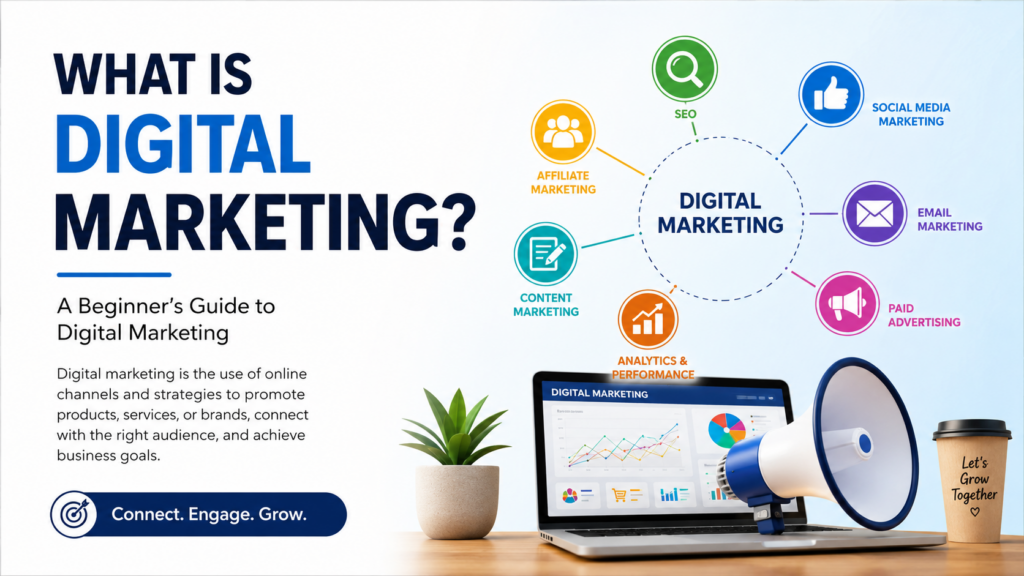
But what exactly is digital marketing? In simple terms, digital marketing is the process of promoting products, services, or brands through digital channels such as search engines, websites, social media, email, and online advertising.
Whether you are a beginner, student, business owner, or someone interested in marketing, understanding the basics of digital marketing can help you build a strong online presence and reach the right audience.
What Is Digital Marketing?
Digital marketing is the promotion of a business, product, service, or brand using digital channels and technologies.
Unlike traditional marketing methods such as newspapers, billboards, and television advertisements, digital marketing allows businesses to connect with audiences through online platforms.
Some common digital marketing channels include:
- Search engines
- Websites
- Social media platforms
- Online advertisements
- Video platforms
- Content platforms
The main purpose of digital marketing is to reach the right audience, increase brand awareness, generate leads, and drive conversions.
Why Is Digital Marketing Important?
Digital marketing has become an important part of modern business because customers are increasingly using the internet to research products and services.
Here are some major benefits of digital marketing:
1. Reach a Wider Audience
Digital marketing allows businesses to reach customers beyond their local area. A well-optimized website or social media profile can attract people from different cities, regions, or countries.
2. Build Brand Awareness
Consistent online content can help people discover and remember your brand.
3. Target the Right Audience
Digital marketing allows businesses to target audiences based on factors such as interests, location, demographics, search behavior, and online activity.
4. Cost-Effective Marketing
Compared with many traditional advertising methods, some digital marketing techniques can be started with relatively small budgets.
5. Measure Performance
One of the biggest advantages of digital marketing is the ability to track performance using metrics such as website traffic, clicks, engagement, leads, and conversions.
6. Improve Customer Engagement
Social media, email, websites, and other digital channels allow businesses to communicate directly with their audience.
Types of Digital Marketing
Digital marketing includes several different channels. Each channel has a specific purpose and can work together as part of a complete marketing strategy.
1. Search Engine Optimization (SEO)
SEO is the process of improving a website so that it can appear more prominently in search engine results.
SEO involves activities such as:
- Keyword research
- On-page SEO
- Technical SEO
- Content optimization
- Internal linking
- Website optimization
- Link building
For example, if someone searches for “digital marketing tips for beginners,” an SEO-optimized article can potentially appear in the search results.
SEO is especially useful for generating long-term organic traffic.
2. Social Media Marketing
Social media marketing involves promoting a brand, product, or service through social media platforms.
Businesses can use social media to:
- Build brand awareness
- Share educational content
- Promote products or services
- Engage with customers
- Generate website traffic
- Build an online community
Popular content formats include reels, videos, carousels, stories, images, and educational posts.
3. Content Marketing
Content marketing focuses on creating and sharing valuable content for a specific audience.
Examples include:
- Blog posts
- Videos
- Infographics
- Guides
- Case studies
- Social media posts
- E-books
Good content marketing helps answer customer questions and can support SEO by creating useful pages that search engines can discover and rank.
4. Email Marketing
Email marketing involves communicating with customers and potential customers through email.
Businesses can use email marketing for:
- Newsletters
- Product updates
- Promotions
- Educational content
- Special offers
- Customer follow-ups
Email marketing can be particularly useful for building long-term relationships with an audience.
5. Pay-Per-Click Advertising (PPC)
PPC advertising allows businesses to pay for advertisements that can appear on search engines, social media platforms, and other websites.
Unlike SEO, which focuses on organic visibility, paid advertising can provide visibility more quickly when campaigns are properly planned and managed.
Common PPC goals include:
- Website traffic
- Lead generation
- Sales
- Brand awareness
- App downloads
6. Affiliate Marketing
Affiliate marketing is a performance-based marketing method where individuals or businesses promote another company’s products or services and receive a commission when qualifying actions occur.
It can help businesses reach new audiences through publishers, creators, websites, and other partners.
7. Influencer Marketing
Influencer marketing involves collaborating with creators who have an established audience.
Brands can work with influencers to:
- Promote products
- Increase awareness
- Reach niche audiences
- Generate engagement
- Build social proof
The right influencer should have an audience that matches the brand’s target market.
8. Video Marketing
Video marketing uses video content to educate, entertain, or persuade an audience.
Examples include:
- YouTube videos
- Short-form videos
- Product demonstrations
- Tutorials
- Educational videos
- Customer testimonials
Video content can also support other digital marketing channels by increasing engagement and content reach.
How Does Digital Marketing Work?
A successful digital marketing campaign usually starts with understanding the target audience.
A simple process looks like this:
Step 1: Identify Your Target Audience
Understand who your ideal customers are, what they need, what problems they have, and where they spend time online.
Step 2: Set Marketing Goals
Your goals should be clear and measurable.
Examples:
- Increase website traffic
- Generate leads
- Increase sales
- Improve brand awareness
- Increase social media engagement
Step 3: Choose the Right Channels
Not every business needs to use every digital marketing channel.
For example, a business focused on organic search may prioritize SEO and content marketing, while a visually driven brand may focus more heavily on social media and video marketing.
Step 4: Create Valuable Content
Create content that answers your audience’s questions and helps them solve problems.
Step 5: Promote Your Content
Use SEO, social media, email marketing, or paid advertising to reach the right audience.
Step 6: Measure Results
Track performance and identify which strategies are producing the best results.
Step 7: Improve Your Strategy
Digital marketing requires continuous testing and optimization. Use your performance data to improve your content, campaigns, and website.
Digital Marketing vs Traditional Marketing
Digital marketing and traditional marketing both aim to connect businesses with customers, but they use different channels.
| Digital Marketing | Traditional Marketing |
|---|---|
| Websites | Newspapers |
| Social media | Billboards |
| Search engines | Television |
| Email marketing | Radio |
| Online advertising | Magazines |
| Video platforms | Direct mail |
Digital marketing provides more opportunities for online interaction, audience targeting, and performance measurement.
Important Digital Marketing Metrics
Measuring results is an important part of digital marketing.
Some common metrics include:
Website Traffic
Shows how many people visit your website.
Click-Through Rate (CTR)
Measures how frequently people click on a link or advertisement after seeing it.
Engagement Rate
Measures interactions such as likes, comments, shares, saves, or other engagement actions.
Conversion Rate
Shows the percentage of visitors who complete a desired action.
Leads
Measures potential customers generated through marketing activities.
Return on Investment (ROI)
Helps evaluate whether marketing activities are producing a worthwhile financial return.
Beginner-Friendly Digital Marketing Strategy
If you are new to digital marketing, you don’t need to use every channel immediately.
Start with these basic steps:
1. Build a professional website
Make sure your website is easy to navigate, mobile-friendly, and provides useful information.
2. Start SEO
Research relevant keywords and create helpful, search-friendly content.
3. Create a content plan
Publish useful blog posts, videos, and social media content consistently.
4. Choose one or two social platforms
Focus on platforms where your target audience is most active.
5. Track your performance
Monitor traffic, engagement, rankings, leads, and conversions.
6. Improve continuously
Use your results to understand what works and optimize your strategy.
Common Digital Marketing Mistakes to Avoid
Beginners often make a few common mistakes when starting digital marketing.
Focusing Only on Selling
Your audience needs useful information, not constant promotional messages. Balance promotional content with educational and engaging content.
Ignoring SEO
Creating a website without considering search engine optimization can make it harder for potential customers to discover your business through search.
Targeting Everyone
Trying to reach everyone can make your marketing message less effective. Define a specific target audience.
Posting Without a Strategy
Consistent posting is useful, but every piece of content should have a purpose.
Not Measuring Results
Without tracking performance, it is difficult to know whether your marketing strategy is working.
The Future of Digital Marketing
Digital marketing continues to evolve as technology, consumer behavior, search experiences, social platforms, and content formats change.
Businesses need to stay adaptable and focus on creating useful experiences for their audiences.
Rather than relying on a single channel, a strong digital marketing strategy can combine SEO, content marketing, social media marketing, email marketing, video marketing, and paid advertising based on business goals.
Conclusion
Digital marketing is an essential part of building an online presence in today’s connected world. From SEO and content marketing to social media, email marketing, video marketing, and paid advertising, businesses have many opportunities to reach and engage their target audience.
For beginners, the best approach is to start with a clear goal, understand the target audience, choose the right digital marketing channels, create valuable content, and measure results consistently.
The key to successful digital marketing is not simply being present online. It is about reaching the right people with the right message at the right time.
If you want to learn more about SEO, social media marketing, content marketing, and digital marketing strategies, explore more articles on this website.