
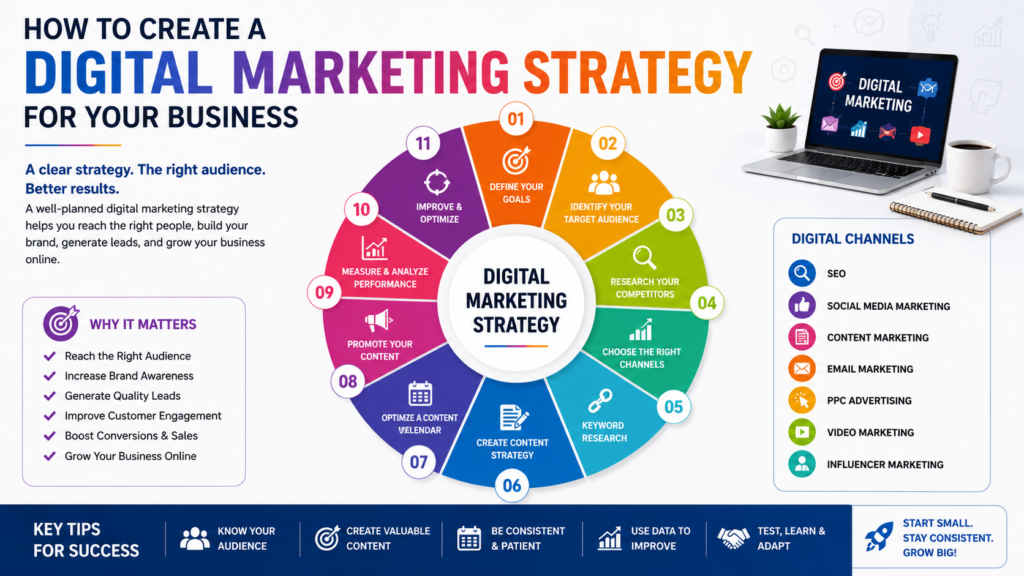
In today’s competitive online world, having a strong digital presence is essential for businesses of all sizes. However, simply having a website or social media account is not enough. Businesses need a clear digital marketing strategy to reach the right audience, increase brand awareness, generate leads, and achieve their marketing goals.
A well-planned online marketing strategy helps businesses decide which digital channels to use, what type of content to create, how to reach potential customers, and how to measure results.
In this guide, you’ll learn how to create a digital marketing strategy for your business step by step.
What Is a Digital Marketing Strategy?
A digital marketing strategy is a planned approach to promoting a business, product, or service through online channels.
It can include:
- Search Engine Optimization (SEO)
- Social media marketing
- Content marketing
- Email marketing
- Pay-per-click advertising
- Video marketing
- Influencer marketing
- Local SEO
- Website optimization
The purpose of a digital marketing strategy is to connect your business with the right audience through the channels they use most.
Why Does Your Business Need a Digital Marketing Strategy?
Without a clear plan, businesses may spend time and money creating content without knowing whether it is helping them achieve their goals.
A digital marketing plan can help you:
1. Reach the Right Audience
You can identify your ideal customers and create marketing messages specifically for them.
2. Increase Online Visibility
SEO, content marketing, and social media can help more people discover your business online.
3. Generate Leads
A strong strategy can guide visitors toward actions such as contacting your business, signing up, or requesting information.
4. Build Brand Awareness
Consistent online content can help people recognize and remember your brand.
5. Measure Marketing Performance
Digital channels provide useful data that can help you understand what is working and what needs improvement.
Step 1: Define Your Business Goals
The first step in creating a successful digital marketing strategy is deciding what you want to achieve.
Your goals should be specific and measurable.
Common digital marketing goals include:
- Increase website traffic
- Improve SEO rankings
- Generate leads
- Increase online sales
- Grow social media engagement
- Build brand awareness
- Increase email subscribers
- Improve customer retention
Example
Instead of setting a goal such as:
“I want more followers.”
Set a more specific goal:
“Increase relevant Instagram followers and engagement over the next three months while driving more visitors to the website.”
Clear goals make it easier to measure your progress.
Step 2: Identify Your Target Audience
Your marketing strategy should be built around your audience.
Before creating content, understand:
- Who your customers are
- What problems they have
- What they need
- What motivates them
- What questions they ask
- Which platforms they use
- How they search for information
For example, a digital marketing website targeting beginners may focus on:
Audience: Students, beginners, small business owners, and people learning digital marketing.
Needs: Simple explanations, practical tips, SEO guidance, content ideas, and marketing strategies.
Understanding your audience helps you create more relevant content.
Step 3: Research Your Competitors
Competitor research can help you understand what is already working in your industry.
Look at:
- Their websites
- Blog topics
- SEO keywords
- Social media content
- Content formats
- Offers
- Calls-to-action
- Customer engagement
Don’t simply copy competitors. Instead, identify opportunities to provide something more useful, clearer, or different.
For example, if competitors publish basic SEO articles, you could create detailed beginner-friendly guides with examples, checklists, and practical steps.
Step 4: Choose the Right Digital Marketing Channels
You don’t need to use every marketing channel at once.
Choose channels based on your audience and goals.
SEO
Use SEO when you want to attract people searching for relevant information, products, or services.
SEO activities can include:
- Keyword research
- On-page optimization
- Content creation
- Technical SEO
- Internal linking
- Local SEO
Social Media Marketing
Use social media to:
- Build awareness
- Engage with your audience
- Share content
- Promote your website
- Build a community
Choose platforms where your target audience is active.
Content Marketing
Create useful content such as:
- Blog posts
- Guides
- Videos
- Case studies
- Infographics
- Tutorials
Content marketing can support both SEO and social media marketing.
Email Marketing
Email can help you maintain relationships with people who have already shown interest in your business.
You can send:
- Newsletters
- Educational content
- Product updates
- Special offers
- Helpful resources
Paid Advertising
Paid advertising can help businesses reach specific audiences and promote products, services, landing pages, or offers.
Paid campaigns should have clear objectives and measurable outcomes.
Step 5: Build Your Keyword Strategy
If SEO is part of your digital marketing plan, keyword research is essential.
Identify keywords that your audience uses when searching online.
For a digital marketing website, examples could include:
- Digital marketing strategy
- Digital marketing tips
- SEO strategies
- Social media marketing
- Content marketing strategy
- Online marketing strategy
- Digital marketing for beginners
Organize keywords according to search intent.
Informational Keywords
Users want to learn something.
Example:
“What is digital marketing?”
Commercial Keywords
Users are researching an option.
Example:
“Best digital marketing strategies”
Transactional Keywords
Users are ready to take action.
Example:
“Digital marketing services”
Creating content around different search intents can help you reach users at different stages of their journey.
Step 6: Create a Content Strategy
Content should be an important part of your digital marketing plan.
Create content that answers your audience’s questions and solves their problems.
Example Content Pillars
For a digital marketing website:
SEO
- SEO tips
- Keyword research
- On-page SEO
- Technical SEO
Social Media Marketing
- Instagram marketing
- Social media strategies
- Content ideas
- Engagement tips
Content Marketing
- Blogging
- Content creation
- Content strategy
- Content planning
Digital Marketing
- Marketing basics
- Digital marketing strategies
- Online marketing tips
- Marketing tools
These content pillars help keep your website focused and organized.
Step 7: Create a Content Calendar
A content calendar helps you stay consistent.
Here is a simple example:
| Day | Platform | Content |
|---|---|---|
| Monday | Website | SEO Blog |
| Tuesday | Marketing Reel | |
| Wednesday | Digital Marketing Tip | |
| Thursday | Carousel | |
| Friday | Website | Marketing Guide |
| Saturday | YouTube | Educational Video |
| Sunday | Social Media | Weekly Tip |
You can adjust this schedule based on your resources and audience.
Consistency is more important than creating an unrealistic publishing schedule.
Step 8: Optimize Your Website
Your website is the center of your digital marketing strategy.
Make sure your website is:
- Mobile-friendly
- Easy to navigate
- Fast-loading
- Secure
- Easy to read
- Search-engine friendly
- Clear about your services
- Equipped with strong calls-to-action
Important website pages may include:
- Home
- About
- Services
- Blog
- Case Studies
- Contact
Each page should have a clear purpose.
Step 9: Create Strong Calls-to-Action
A call-to-action tells visitors what to do next.
Examples include:
- Contact Me
- Learn More
- Get Started
- Read the Blog
- Book a Consultation
- Download the Guide
- Follow Me
- Subscribe
Place relevant calls-to-action throughout your website and content.
Step 10: Use Social Media to Promote Your Content
Don’t publish a blog post and simply leave it on your website.
Promote it across relevant social media channels.
For example:
One Blog Post
“10 Effective SEO Strategies to Improve Your Website Ranking”
Can become:
- Instagram carousel
- Instagram Reel
- LinkedIn post
- Facebook post
- YouTube Short
- Email newsletter
This is called content repurposing.
It allows you to get more value from one piece of content.
Step 11: Measure Your Digital Marketing Performance
A successful digital marketing strategy should always be measured.
Important metrics include:
Website Traffic
How many people visit your website?
Organic Traffic
How many visitors come from search engines?
Keyword Performance
How visible is your website for your target keywords?
Social Media Engagement
How are people interacting with your content?
Click-Through Rate
How often do people click your links or search results?
Leads
How many potential customers are you generating?
Conversion Rate
What percentage of visitors complete a desired action?
Return on Investment
Is your marketing generating enough value compared with what you spend?
Step 12: Analyze and Improve Your Strategy
Digital marketing is not a “set it and forget it” process.
Review your performance regularly.
Ask:
- Which content receives the most traffic?
- Which keywords perform well?
- Which social posts get the most engagement?
- Which pages generate leads?
- Where are visitors leaving?
- Which marketing channels produce the best results?
Use these insights to improve your strategy.
Example of a Simple Digital Marketing Plan
Let’s imagine a small business wants to improve its online presence.
Goal
Increase online visibility and generate more website inquiries.
Target Audience
Young adults and local customers interested in the business’s products or services.
SEO Strategy
- Research relevant keywords
- Publish two helpful blogs per month
- Optimize important website pages
- Improve internal linking
Social Media Strategy
- Publish educational posts
- Create short-form videos
- Share customer-focused content
- Engage with followers
Content Strategy
Create:
- Blog posts
- Reels
- Carousels
- Guides
- FAQs
Measurement
Track:
- Organic traffic
- Keyword visibility
- Social engagement
- Website clicks
- Leads
This creates a simple but structured online marketing strategy.
Common Digital Marketing Mistakes to Avoid
1. Trying to Use Every Platform
Focus on the platforms that matter to your audience.
2. Posting Without a Strategy
Every piece of content should have a purpose.
3. Ignoring SEO
A website needs to be discoverable through search if organic traffic is an important goal.
4. Focusing Only on Followers
Follower count is not the only measure of marketing success.
5. Not Tracking Results
Without measurement, it is difficult to know whether your strategy is working.
6. Expecting Instant Results
SEO, content marketing, and audience building often require consistent effort over time.
Simple 90-Day Digital Marketing Plan
Month 1: Build the Foundation
- Define your target audience
- Set marketing goals
- Research competitors
- Perform keyword research
- Optimize your website
- Create content pillars
- Set up analytics and tracking
Month 2: Create and Publish
- Publish SEO-focused blogs
- Create social media content
- Optimize important website pages
- Build internal links
- Promote your content
- Start building your online presence
Month 3: Analyze and Improve
- Review website traffic
- Check keyword performance
- Analyze social media engagement
- Identify top-performing content
- Improve underperforming pages
- Update older content
- Adjust your strategy based on data
This 90-day approach provides a practical starting point for a new digital marketing plan.
Conclusion
Creating a successful digital marketing strategy requires more than simply posting on social media or publishing blog articles. You need to understand your audience, define clear goals, choose the right marketing channels, create valuable content, optimize your website, and measure your results.
A strong online marketing strategy should be flexible. As you collect data and learn more about your audience, you can adjust your campaigns and focus on the channels that produce the best results.
Start small, stay consistent, measure your performance, and improve continuously.
Plan your strategy. Create valuable content. Reach the right audience. Measure your results. Grow your online presence.